THE ORCHESTRA: A USER'S MANUALThis
is the original 2005 site.
|
|---|
| Introduction | Orchestration | Orchestration | Resources | Historical | Andrew Hugill |
|---|---|---|---|---|---|
| Philharmonia |
Unpitched Skin
|
NAME
|
DESCRIPTION
|
BEATERS
|
LISTEN/VIEW
|
COMMENTS
|
|
bass
drum
|
Very
deep two-headed drum, stood or suspended either vertically or horizontally.
50cm - 2m diameters.
|
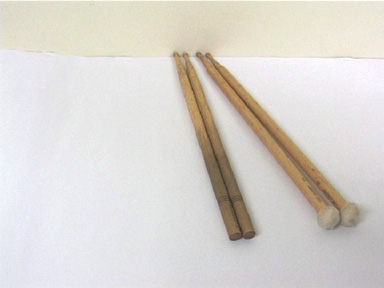
 Bass drum mallets range from hard to soft, as well as rute and other beaters.  rute beaters on the bass drum |
|
|
|
bongo
drums
|
Pairs
of small single-headed drums with tapered sides
|
Medium
mallets, sticks or hand
|
 with
beaters with
hands typical
pattern |
Authentically
played with the hands, but usually played with beaters in an orchestral
context.
|
|
djembe
|
North
African hand drum, with an extended and outward-tapering resonating
column
|
Hands
|
|
Plenty of sounds available on this instrument, and the addition of metal 'wings' add a buzz. |
|
djun
djun
|
African
double-headed drum, but normally played on one head only, with the
other hand playing a cowbell attached to the body of the drum
|
Medium
bass drum beater
|
 djun djun |
|
|
lion's
roar
|
A single headed drum with a rosined cord through the head. Pulling the cord produces a distinctive roar. |
Hand
|
||
|
snare
drum
|
Two-headed
drum, with metal snares strung on one side and engaged or disengaged
by a handle. Usually placed on a stand. Sizes range from 15-18cm
for the standard orchestral instrument, to 45-90cm for the field
drum and 8-10cm for the piccolo snare.
|
plus soft vibe mallets |
|
Snare drum technique provides the basis for most other sticking techniques in Western music. Be sure to specify snares on or off. It is a good idea to leave snares off when the drum is not being played, in order to avoid unwanted buzzing caused by the vibration from other instruments. |
|
surdo
|
Latin
American bass drum, single-headed. Hits can be damped, or open,
and a typical pattern would include rim hits.
|
Small
bass drum beaters
|
|
The drum can be lifted with the feet to open out the sound. |
|
talking
drum
|
An egg-timer shaped drum, with leather cords stretching the two heads. The drum is placed under the player's arm, and the skins struck with a wooden beater. The player squeezes the cords to adjust head tension, thus creating the 'talking' effect. |
Wooden
beater
|
||
|
tambourine
|
A
slitted hoop of wood, with skin stretched over it to form a head,
and with jangles threaded through the slits
|
Hand
and any other durm beater
|
|
|
|
tenor
drum
|
A
field drum without snares
|
Bass
drum or wooden beaters
|
Some
patterns: |
'Muffled' drum = cloth placed on head. N.B. this is not the same as a 'muted' drum. |
|
tom-toms
|
Anything
up to 6 small, straight-sided drums, either double or single-headed.
|
Medium
to soft mallets
|
|