
• Andrew Hugill
  • Philharmonia
  • Credits
  • Testimonials
The Orchestra: A User's Manual
  • Home
  • ORCHESTRATIONby SECTION
    • Woodwinds
    • Brass
    • Percussion
    • Others
    • Strings
    • Combinations
    • Tuttis
  • ORCHESTRATIONby INSTRUMENT
    • Flutes
    • Oboes
    • Clarinets
    • Bassoons
    • Saxophones
    • Horns
    • Trumpets
    • Trombones
    • Tubas
    • Percussion
    • Keyboards
    • Harps
    • Fretted Strings
    • Voices
    • Electronics
    • Violins
    • Violas
    • Cellos
    • Double Basses
    • Conductors
  • RESOURCES
    • Score Layouts
    • Seating Plans
    • Ranges/Transpositions
    • Harmonic Series
    • Language/Phonetics
    • Notation Charts
  • HISTORY
    • 20th/21st Century
    • 19th Century
    • Classical
    • Baroque
    • Pre-Baroque

Fretted Strings: Guitar

  • Guitar
  • Banjo
  • Mandolin
  • Plucking
  • Extended Techniques
  • Player's Tips & Tricks
  • Links

The classical acoustic guitar may be strung with nylon or steel strings. The standard guitar tuning is (written):
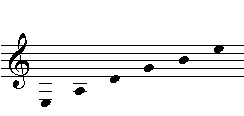
N.B. All guitars sound an octave lower than written

The strings are usually numbered from I (top) to VI (bottom) and each string has a range of one octave plus a fifth. This applies to electric and other guitars too, although there numerous variations in tuning given the requirements of different musical styles. The 12-string guitar also adopts this tuning, but the lowest four strings are doubled in octaves, while the upper two are doubled in unison, giving a fuller sound. Classical guitar is usually plucked with the fingernails, but other guitars often use plectrums or picks.

Balancing the guitar in an orchestra:

Using electric guitar:

Tone:

Colours:

The guitar as its own orchestra:

Guitar harmonics

To hear the full range of the guitar, click HERE.


  Copyright © 2015 Andrew Hugill. All rights reserved.
top